

A second temperament is not a rounding error
Most people finish the test with two temperaments in the formula instead of one. The second is not noise left over from the first. It decides how you start, and how you stop.
- Thirteen profiles in the model
- Eight of them are blends
- Order changes the profile
Four environments, one field. Every profile on this page is a position inside it, not a separate world.
Why a blend is the ordinary outcome
The test measures eight scales, and those eight fold into two axes: how much activity a person puts out, and how steadily that activity holds. A profile is a point in that field. Corners of a field are small, the middle of it is wide, so most points land somewhere between two corners rather than inside one.
That is the whole difference between a pure type and a blend. Pure means the leading share is far ahead of the second, by at least fourteen points of the formula. Blend means the second share sits close behind the first. Both are complete readings, not degrees of certainty: a blend is not a result the test failed to sharpen.
The second temperament does not take half the person. It changes the timing of the first one. The same drive arrives after a conversation or before it, the same calm holds through an argument or gives way to it. That is why two people with the same leading type can be unrecognisable to each other.
How the formula is calculatedWhy thirteen and not twelve or sixteen
The count is not a design choice. It falls out of the two axes, and nothing else fits between the numbers.
Pure profiles
One temperament clearly ahead: the gap to the second is fourteen points of the formula or more.
Blends of neighbours
Two temperaments that share an axis, close together, in either order. Four pairs, two orders each.
Balanced profile
Both axes near the middle. No leading temperament is named, because naming one would be reading noise.
The field and the thirteen positions
Two axes, four corners, thirteen marked positions. A profile is where a person lands, not a box they are sorted into.
The map shows where profiles sit in relation to each other. It is not a population norm: we do not have one, and inventing one would be dishonest.
All thirteen profiles
Four pure, eight blends, one balanced. Each card opens the page that covers that profile in full.
Pure profiles
- Breezepure sanguine profile
Fast to start and fast to warm up, with little that stays heavy for long.
Read the page - Blazepure choleric profile
Drive with a short fuse to it: movement first, and force when movement stops.
Read the page - Harborpure phlegmatic profile
A level background that holds. Nothing is urgent, most things get finished.
Read the page - Grovepure melancholic profile
Depth and fine detail, paid for with a long return after anything loud.
Read the page
Blends of two temperaments
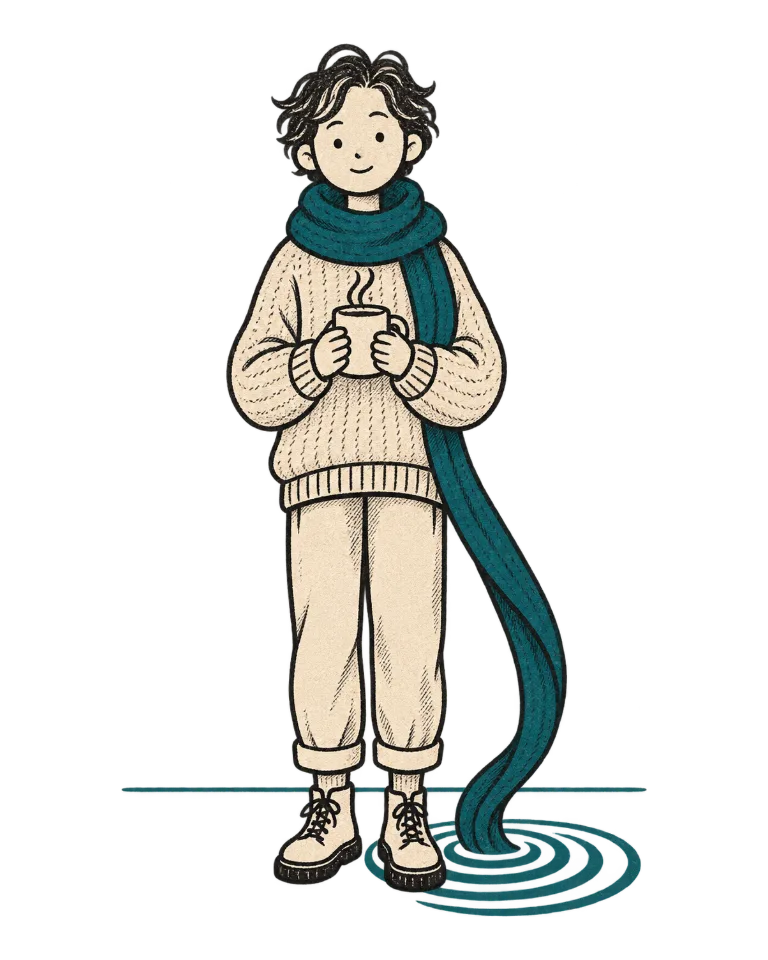
- Tailwindsanguine-choleric blend
Lightness that pushes. Contact comes first, pressure arrives once the room stalls.
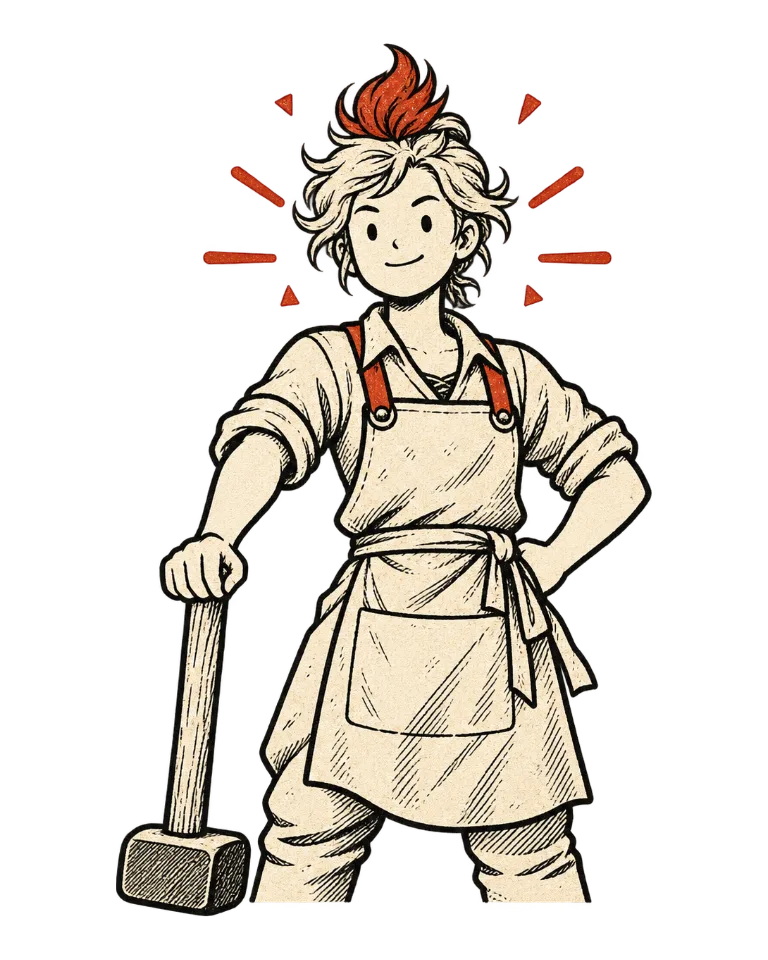
Read the page - Bonfirecholeric-sanguine blend
Force that gathers people. The push comes first and the warmth carries it.
Read the page - Sea Breezesanguine-phlegmatic blend
Easy company on a calm base. Starts things, and rarely raises the temperature.
Read the page - Lagoonphlegmatic-sanguine blend
Steady ground with a spark. Quietly friendly, harder to move than it looks.
Read the page - Forgecholeric-melancholic blend
Will that demands a shape. Exacting about the result, slow to let a fault go.
Read the page - Embermelancholic-choleric blend
Deep slow heat. Quiet from outside, stubborn about standards on the inside.
Read the page - Riverbedphlegmatic-melancholic blend
An even current in a deep channel. Little on the surface, a great deal underneath.
Read the page - Deep Lakemelancholic-phlegmatic blend
Still depth. Watches longer than it speaks, and keeps what it noticed.
Read the page
Why the order changes the profile
A pair of temperaments produces two profiles, not one. The leading temperament sets the first move, the secondary decides what happens when the first move does not work. Swap them and the same two forces read as two different people.
This is the part that most descriptions skip, and it is the part people recognise themselves in. It is also why every blend page here holds two profiles side by side instead of one averaged portrait.
Both profiles hold the same two temperaments in the formula. What differs is which one moves first.
Two combinations that never come out
Sanguine with melancholic, and choleric with phlegmatic, sit in opposite corners of both axes. In this model one always displaces the other: if sanguine leads, melancholic cannot come second, because phlegmatic passes it every time.
The demand for those two searches is real, and it comes from older systems that counted differently. Each has a page here, where the arithmetic is explained and the usual reasons behind the feeling are laid out.
Which of the thirteen is yours
Nobody can read a blend off a description, including you. The formula comes from eight measured scales, and the difference between a pure type and a blend is a matter of a few points, which is exactly the size of a guess.
Take the test166 statements, 15 to 20 minutes, and the result with the formula, the portrait and the eight scales costs nothing.
Common questions about blends
01Is a mixed temperament worse than a pure one?
No, and the model does not rank them. A pure profile means one temperament is far ahead of the rest; a blend means two are close. Both are complete descriptions of a position in the same field, and both carry the same amount of information about how a person starts, holds and recovers.
02Can I have three temperaments in my profile?
The formula always shows four percentages, so all four are present in some amount. What the profile names is the top of that list: either one temperament clearly ahead, or two close together. A third place close behind means the profile sits near the middle of the field, and that outcome has its own name and its own page.
03Why does the order of the two temperaments matter?
Because the leading temperament decides the first move and the secondary decides what happens next. Sanguine leading with choleric behind opens with people and applies pressure afterwards. Choleric leading with sanguine behind opens with the task. The forces are the same, the sequence is not, and the sequence is what other people see.
04Can my profile change over time?
The scales are stable tendencies, so large jumps are unlikely, but a profile sitting close to a border can move to the neighbouring one between two sittings. Sleep, a rough month or a loud room during the test shift a few points. That is why the result shows the whole formula and not only the name.
05Why does this model have thirteen profiles when other systems have twelve or sixteen?
Because the count follows from the structure rather than being chosen. Two axes give four corners, four adjacent pairs in two orders each give eight blends, and the middle of the field gives one balanced profile. Opposite corners cannot pair, so no combination beyond those thirteen is reachable.
See which position on the map is yours
One test, thirteen possible outcomes, and a page waiting behind each of them.
Take the test